
Breakthroughs across science and technology often hinge on serendipity. What if Einstein’s thought experiments had never occurred - or had emerged decades earlier? The trajectory of modern science, and the world itself, would look profoundly different.
We tend to see the modern era as fundamentally separate from the past, yet the laws of nature have never changed. In principle, nothing prevented the invention of the steam engine in antiquity. Indeed, a precursor already existed: the aeolipile, a steam-powered device regarded at the time as a scientific curiosity. What was missing was the crucial bridge between an isolated insight and connected application - the vision to refine, scale, and invest in such an idea as a transformative, cross-domain technology. Had those connections been made, the industrial revolution might have ignited a millennium earlier.
For a long time, the scientific community believed the main barrier to such progress was access to knowledge. If only information could spread freely, discovery would naturally follow. But after decades of unprecedented information abundance, a subtler truth has emerged: access matters, but context matters more. Knowing what is true, what is relevant, and how ideas connect is the real bottleneck.
At Unreasonable Labs, we believe progress comes not only from retrieving and producing more “reasonable sounding” facts, but from weaving information into new, non-obvious insights. Two thousand years ago, it would have seemed unreasonable to bet that the aeolipile hinted at a global revolution. Our goal is to uncover what’s “unreasonable” today - and what will shape tomorrow.
Limitations in AI for Innovation
While Large Language Models (LLMs) have demonstrated remarkable performance across a wide range of tasks, they are fundamentally insufficient for addressing the core challenges of scientific innovation:
- LLMs optimize for statistical plausibility in text rather than physical validity in the world. While this objective allows them to model linguistic representations of scientific knowledge, it does not ensure that generated hypotheses satisfy the causal laws governing physical systems. As scientific innovation moves from reasoning about language to developing real physical solutions - designing a new composite resin, inventing a new chemical compound, or inventing a novel material - probabilistic fluency is not enough, and should be augmented by mechanisms that comply with physical laws, scientific axioms, or hard constraints.
- Most contemporary AI systems, including LLMs, are fundamentally closed. Once trained, their internal representations are frozen: they can recombine what they have seen, but they cannot revise their underlying models of reality in response to genuinely new phenomena. This limitation becomes critical in enabling AI for innovation, where progress often requires breaking the boundaries of existing assumptions. In engineering and science, new technologies frequently emerge by revealing truths that initially appeared non-obvious. What is statistically “likely correct” according to existing knowledge may therefore diverge from novel but valid discoveries. True innovation therefore requires systems capable of finding insights beyond their closure of training distribution and expanding their internal models of the world.
- Today’s research agents operate on fragmented knowledge infrastructure. They retrieve isolated documents through search and retrieval, but lack a unified representation that connects facts, mechanisms, and causal relationships in the real world. Although they have access to vast amounts of information, they do not grasp the deeper structures and patterns critical that drive scientific discovery. As a result, current AI systems fall short in enabling cross-disciplinary insights and generating leapfrog intuitions.
Reasoning with Abstraction
True discovery requires more than just retrieval; it requires first-principles reasoning. It requires an AI that can reduce vast amounts of data into transferable principles (laws, invariants) and then compose those principles to generate new insights.
Think of the transition from discovering fire to mastering fusion. Fire is a chemical reaction we stumbled upon C + O2 → CO2 + E. But to get to fusion, we had to fundamentally rewire our world model and develop a much deeper understanding of the relationship between energy and matter, as captured in E=mc2. We had to compress complexity into reusable structures and laws. This is what we are building at Unreasonable. We are moving beyond standard LLMs to creating a “Superintelligence for Knowledge Creation and Discovery.”
A Living World Model
We are building an operating system for autonomous discovery. Unlike standard chatbots, Unreasonable’s platform builds a multi-faceted “World Model.” It goes beyond just scanning text; it integrates data with physics engines, simulation tools, and even hardware robotics to validate its hypotheses. When you ask our AI a question - for instance, how to replace sugar in a beverage without losing “mouthfeel” - it does not merely summarize existing research articles. It reasons across scales. It connects the molecular structure of saponins and surface-active peptides to the macroscopic sensory experience of bubble formation. It navigates a web of knowledge to find cross-domain analogies, perhaps drawing inspiration from plant biology to design cellulose crystals that regulate beverage consistency.
In cell biology, the same logic applies. Ask why a tissue folds during development, and the reasoning should not stop at gene expression or signaling pathways. Instead, it should link back to the geometry and forces in the physical world, for example, actomyosin contractility, cell-cell adhesion, and extracellular matrix stiffness, and how these give rise to the emergent tissue-scale mechanics. Our system simulates how changes in cortical tension reshape individual cells, propagate stresses across a tissue sheet, and ultimately drive a macroscopic fold, then connect those predictions to measurable perturbations such as laser ablation or optogenetic control of myosin. Rather than the conventional way of relying on correlations across datasets, it reasons forward from physical mechanisms by carrying out virtual experiments, making causal predictions that can be tested through targeted perturbations.
We move toward a virtual laboratory, not merely a tool-using agent. We pair our knowledge engine with a persistent, physics-aware environment that it can interact with, get instant responses and test design hypotheses at large scales. This virtual lab enables an AI that does not just answer questions, but gradually develops a working understanding of structures, materials, and biology grounded in physical reality. Each experimental result is folded back to our reasoning fabric, enabling an iterative loop in which the structured knowledge evolves with every hypothesis tested, shaping how the system generates the next hypothesis.
CASE STUDY: Bioinspired Architected Material Design
Designing materials that are simultaneously impact-resistant, flexible, and lightweight remains a persistent challenge across industries, from protective equipment and transportation to aerospace and robotics, because improvements in one property often come at the expense of another. Here, we explore how our discovery platform can help engineers break out of those trade-offs by expanding the design space beyond familiar solutions, while remaining physically grounded.
In this case, using our platform’s Enhanced Discovery capabilities, this materials engineer finds specific inspiration from butterflies. As an organism not commonly associated with mechanical properties, this is a connection that traditional AI models based solely on probabilistic word associations struggle to identify. By empowering a materials engineer with unexpected biological inspiration, early validation before fabrication, and rapid “vibe” implementation, the workflow demonstrates a faster, lower-risk path to innovation. The result is not just a novel butterfly-inspired material architecture with measurably improved mechanical performance, but a new way of working: one that empowers engineers to confidently explore unfamiliar domains and unlock more creative designs that would be difficult to reach through traditional methods alone.
Exploring the Reasoning Process
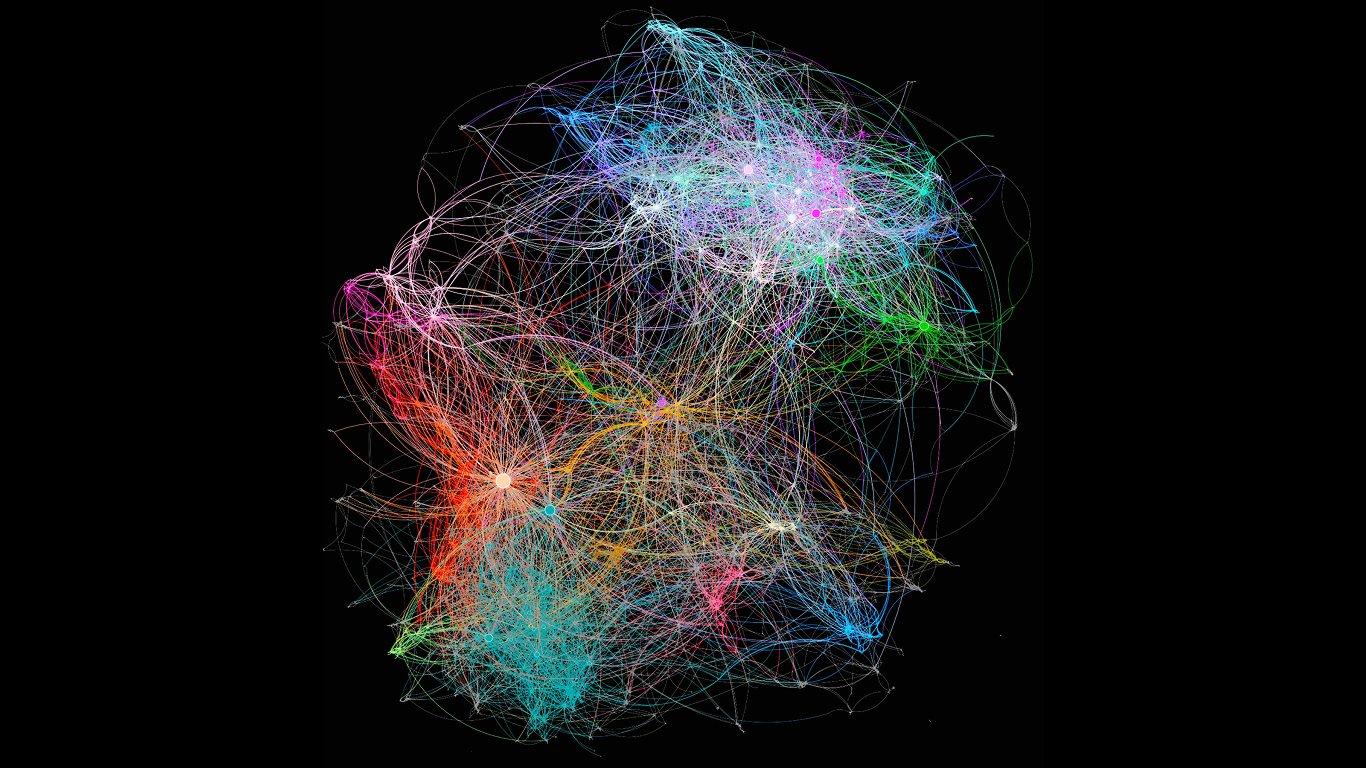
We have designed our reasoning process to be a transparent procedure, not a Black Box. We provide a Reasoning Fabric - an interactive visualization where you can see the AI connecting the dots, forming hypotheses, and validating them against physical laws. It allows for and encourages a true collaboration where human ingenuity directs the AI's vast processing power.
We evaluated our system using an internal, contamination-free benchmark specifically designed to assess knowledge creation, including both innovativeness and correctness. Our model demonstrated strong innovative reasoning capabilities, generating hypotheses and conclusions closely aligned with the latest research literature. In contrast, while the frontier models we tested were effective at retrieving relevant papers and producing systematic summaries, they did not generate genuinely novel insights or reason toward creative solutions.
User Experience and Human-AI Reasoning
Our AI is a collaborative process between researchers and the model. An important frontier in AI is to design the operating system for discovery - to allow human-AI collaboration, to capture tacit human knowledge not seen in papers, and to enable orchestration of hundreds of tools seamlessly into a unified ecosystem.
The interface is designed to fit how scientists actually think and work, grounded in real research workflows rather than generic chat-based interaction, helping them explore ideas and understand trade-offs without getting lost in complexity. By making outputs easier to interpret and giving users clear points of control, the system supports iterative experimentation, builds trust over time, and helps researchers turn model suggestions into confident decisions. Together, these design choices play a meaningful role in enabling faster and higher-quality discovery.
The Future is Abundant Innovation
Unreasonable bridges the gap between the known and unknown. As our awareness of the world’s interconnectivity grows, so too does the scale of the challenges we face. Many global challenges are beyond the ability of any single person to fully comprehend, let alone solve. But by augmenting human drive with interactive, grounded, relational AI, we can extend our reach and tackle problems once thought impossible. We are building a world where innovation is abundant across many avenues of impact.
In a world where chemists can reduce the risk and cost of drug development by seamlessly connecting relevant biochemical motifs to their underlying quantum mechanical principles, diseases that receive less attention - but are no less debilitating - can be addressed more equitably and at greater scale. Materials innovations born at the intersection of traditionally siloed fields have the potential to reshape our built infrastructure, making structures cheaper, stronger, and safer while giving architects and engineers greater freedom to express new forms and functions. And when we can fluently connect insights across nanoscale chemistry, microstructural engineering, global environmental analysis, and real-world supply chain constraints, sustainable solutions to the global plastic waste problem may finally come within reach.
We envision a world of innovation at the deepest conceptual level, where peeling back jargon and historical silos reveals shared patterns of thought across disparate mindsets - creating a more connected, wiser world. By forging these seemingly unreasonable connections, again and again, we move beyond merely coping with the present and toward a shared future of sustained collective progress.
